Share:
How to Become an N₂O Cream Charger Distributor in Europe: Requirements, MOQ and Margins
Almost every cream charger supplier in Europe has a “Become a Distributor” page. Almost none of them tell you what the requirements actually are. You fill in a form, you wait, and you find out the terms only after someone decides whether to reply.
This guide does the opposite. It sets out what a nitrous oxide distributor arrangement genuinely involves — the capital, the volume, the compliance obligations and the margin structure — so you can decide whether it fits your business before you speak to anyone.
Reseller, wholesale buyer, or distributor?
These three words get used interchangeably and they mean very different things commercially. Getting the distinction right saves a lot of wasted conversation.
A wholesale buyer purchases stock at trade price and sells it on, usually through their own shop or to their own customers. There is no territory, no exclusivity, and no commitment beyond each individual order. Most trade customers are here, and for many businesses it is the right place to stay.
A reseller is broadly the same relationship with a slightly more formal ongoing arrangement — repeat orders, agreed pricing, sometimes co-branded material.
A distributor takes stock at the deepest tier, holds inventory, and takes responsibility for supplying a defined market — often a country or region. In exchange for volume commitment and the working capital that inventory ties up, the distributor gets the best per-unit pricing and, in many cases, territorial protection. This is a genuine business relationship with obligations flowing both ways.
If you are unsure which you want, start as a wholesale buyer. Distribution is not a shortcut to better pricing — it is a commitment that earns better pricing.
What suppliers actually assess
When a serious supplier evaluates a distributor application, they are asking five questions. You will be a far more credible applicant if you answer them before being asked.
Do you have existing distribution? An established route to market — a customer base, a sales team, a shop network, or existing horeca accounts — matters more than almost anything else. A distributor with no customers is a warehouse.
Can you carry inventory? Distribution economics only work if you hold stock so your customers do not have to wait. That means warehouse space and working capital tied up in gas. Be honest with yourself about both.
Can you handle the product legally? Nitrous oxide is a pressurised gas classed as dangerous goods for transport. Storage, handling and onward shipping all carry obligations that vary by country. A supplier needs to know you understand them.
Are you selling into the right channel? Reputable suppliers work with businesses selling into culinary and professional food-service channels. Food-grade N₂O carries the designation E942 and is supplied for culinary use. Any applicant whose intended market looks like recreational supply will be declined, and should be.
Will you still be here in three years? Distribution agreements are long-cycle. Suppliers are looking for stability, not a quick flip.
Minimum order quantity and how volume actually scales
The single most common reason a distributor conversation stalls is a mismatch between the volume the applicant expects and the volume they can actually move.
At MonsterWhip the entry minimum order is 20 boxes. That is deliberately low — it exists so a new trade customer can test the product, the packaging and the delivery process without a serious capital commitment. It is a starting point, not a distributor volume.
Distributor pricing sits several tiers above that, at pallet-scale volume. The reason is structural rather than arbitrary: nitrous oxide ships as dangerous goods, and freight is one of the largest single components of landed cost. Freight cost per unit falls dramatically when you move from parcel-scale to pallet-scale shipping, and that reduction is where most of the distributor discount genuinely originates. It is not a favour, it is arithmetic.
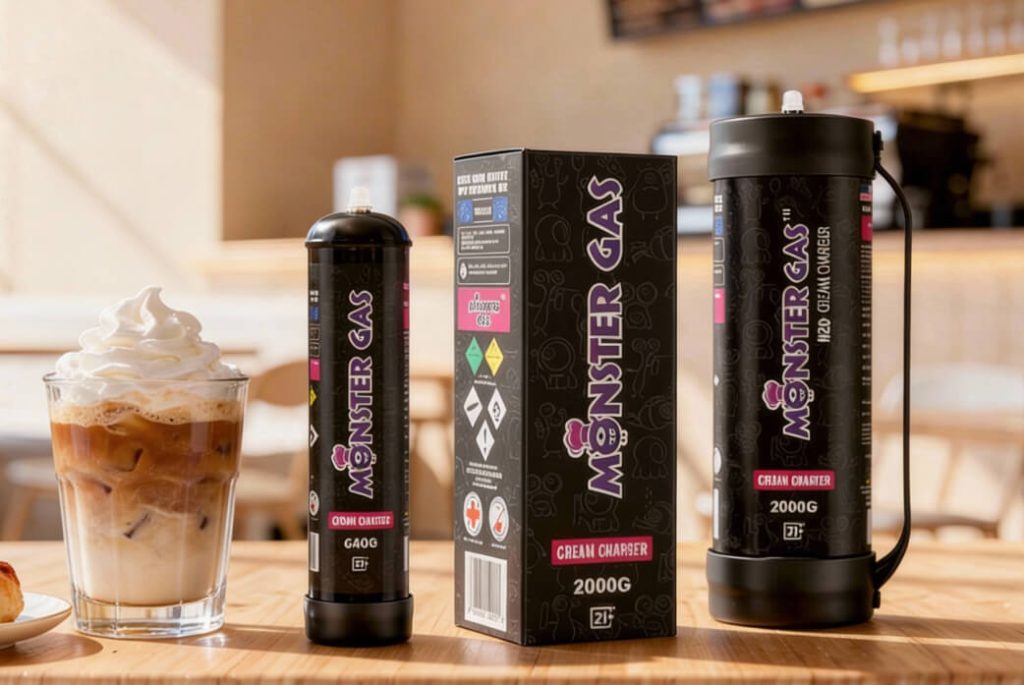
Formats available are 8g chargers, 640g cylinders, 2kg and 3kg tanks, and full pallets. A well-constructed distributor order usually blends formats to match real demand in the territory rather than chasing the lowest headline unit cost on a single SKU.
How the margin actually works
Distributor margin comes from three places, and only one of them is the discount.
The price tier. The obvious one. Deeper buy price, wider spread.
Freight arbitrage. You buy at pallet freight rates and sell at parcel freight rates. For a distributor moving consistent volume this is frequently a larger contributor than the headline discount, and it is the part most applicants overlook entirely.
Availability premium. A distributor holding local stock can deliver next day. Customers pay for that, and they stay for it. Competitors importing on a three-week lead time cannot match it. This is the durable advantage in the relationship.
Against those, budget for the real costs: warehousing, insurance for pressurised goods, breakage, capital tied up in stock, and the sales effort required to move it. The businesses that succeed as distributors are the ones that model all of this honestly before signing, not after.
One planning note that matters more than margin: run your numbers on stock turn, not on margin percentage. A distributor turning inventory eight times a year at a modest spread will out-earn one turning it twice at a generous spread, every time.
The 2027 deadline you need to plan around
Anyone entering nitrous oxide distribution in Europe now should be building their plan around the tightening regulatory environment. Under the EU chemicals framework, significant changes affecting nitrous oxide supply are due by 1 February 2027. Several national governments have separately moved to restrict recreational supply, and the direction of travel is consistent across the bloc.
The practical implication for a prospective distributor is straightforward and, if anything, favourable. Suppliers who cannot document food-grade quality and compliant handling will be squeezed out. Distributors aligned with a supplier who can are likely to find the competitive field thinning rather than crowding. Compliance is not a cost centre here — over the next two years it is the moat.
Ask any supplier you talk to how they are preparing for 2027. The quality of the answer tells you a great deal.
How to approach it
The fastest path is also the least glamorous. Start with a trade order at the 20-box minimum. Test the product with your own customers. Confirm the delivery experience, the packaging condition and the lead time. Build a short record of repeat orders.
Then open the distributor conversation with actual evidence — this is what I sell, this is my repeat volume, this is the territory, this is the customer base. A supplier can evaluate that in a single conversation. An application with no trading history behind it takes months and usually goes nowhere.
Talk to us
MonsterWhip supplies food-grade E942 nitrous oxide for culinary use across North America and Europe and the United States, in 8g chargers, 640g cylinders, 2kg and 3kg tanks and full pallets. Products are supplied strictly for professional culinary applications.
If you are considering distribution, message us on WhatsApp with three things: the territory you cover, the customers you already sell to, and the monthly volume you believe you can move. That is enough for a straight answer on terms — usually the same day.
Message MonsterWhip on WhatsApp about distribution →
Further reading: our wholesale terms, wholesale cream chargers in Europe, and how the main N₂O brands compare.
Recent posts
- Top 10 Best N2O Suppliers in the World (2026): Cream Charger Brands Ranked
- How to Become an N₂O Cream Charger Distributor in Europe: Requirements, MOQ and Margins
- Cream Charger Wholesale Pricing in 2026: Cost Per Case, Volume Tiers and Retailer Margins
- Mochi Squishies vs Stress Keyboards: What Actually Sells Through at Christmas
- The October Cutoff: Ordering Christmas Impulse Toys in Time for Black Friday