Delen:
Cream Charger Safety: Storage & Compliance
Why Safety Matters for Cream Chargers
Food-grade N₂O cream chargers are a safe, everyday tool in thousands of professional kitchens across Europe. Like any pressurised product, however, proper storage and handling ensures they perform reliably and poses zero risk to your staff. This guide covers everything your kitchen team needs to know.
Storage Best Practices
Temperature: Store cream chargers at room temperature, between 15-25°C. Never place them near ovens, grills, sous vide baths, or any heat source. During summer months, ensure your storage area doesn’t exceed 30°C — especially in kitchens where ambient temperatures can climb significantly during service.
Humidity: Choose a dry, well-ventilated area. Moisture can corrode the steel casing over time, particularly for 8g chargers which have a larger surface-area-to-volume ratio.
Organisation: Implement a FIFO (first in, first out) system. Label each delivery with the date received and always use the oldest stock first. This prevents chargers from sitting unused past their expiry date.
Access control: In professional settings, designate a specific storage area and ensure only trained staff have access to cream chargers and dispensing equipment.
Safe Handling During Service
Use only compatible equipment: Only use cream chargers with dispensers or regulators specifically designed for N₂O. Never attempt to puncture a charger without the proper device.
Check for damage: Before loading any charger, visually inspect it for dents, corrosion, or deformation. Damaged chargers should be set aside and returned to the supplier — never used.
Ventilation: Always use cream chargers in a well-ventilated kitchen. While N₂O is non-toxic and non-flammable in normal conditions, it can displace oxygen in enclosed spaces if released in very large quantities.
Dispose responsibly: Empty 8g chargers are made of recyclable steel. Collect them separately and recycle through your local metal recycling service. Larger format cylinders may be returned to the supplier for refilling or recycling.
Regulatory Compliance
In the EU, food-grade N₂O is classified as food additive E942 and is approved for culinary use. All cream chargers sold for food preparation must carry the CE mark and meet applicable European safety standards. As a food business, ensure your supplier can provide full certification documentation — this protects both your business and your customers.
Keep a copy of your supplier’s food-grade certification on file as part of your HACCP documentation. Inspectors may request this during routine food safety audits.
Staff Training
Brief your kitchen team on proper cream charger handling as part of their standard kitchen induction. Key points to cover: correct loading procedure for your specific dispenser, storage location and FIFO rotation, what to do if a charger appears damaged, and basic first aid (ventilate the area) in case of an accidental large gas release.
Source Safe, Certified Cream Chargers
CE-Certified, Food-Grade N₂O
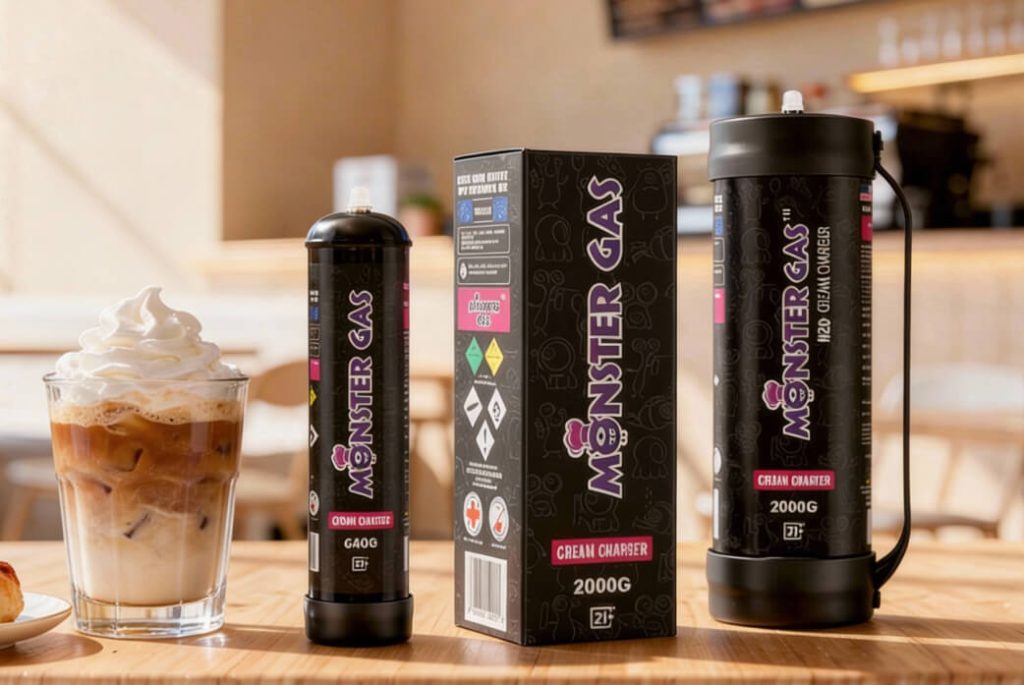
MonsterWhip supplies only CE-certified, food-grade cream chargers with full documentation. Trusted by hundreds of restaurants across Europe.
Explore All Our Guides
Visit our resource centre for professional guides on N₂O usage, regulations, and best practices.
Related MonsterWhip Resources
Wholesale Europe · Wholesale USA · N2O Laws by Country · Cost Calculator · Compare Brands
Looking for wholesale N₂O cream chargers?
MonsterWhip supplies food-grade N₂O to restaurants, bars and caterers across Europe. Fast delivery, EU-certified, 99.7% purity.
- MonsterWhip 2KG N₂O Cylinder — from €21 per cylinder
- ★ Pallet of 168 × 2KG — best wholesale price, €3,528 + shipping
- Browse the full product range →
- Request a wholesale quote →
Frequently Asked Questions
How should N2O cream chargers be stored in a professional kitchen?
Store upright in a cool, dry place away from sunlight and heat. Recommended temperature: 0-50°C. Keep away from open flames and ensure good ventilation. Always use food grade E942 certified N2O commercially.
Are N2O cream chargers safe in a commercial kitchen?
Yes, E942 certified N2O is safe for professional use when stored and handled correctly. Use certified products, follow manufacturer guidelines, and ensure adequate ventilation.
What is the maximum storage temperature?
Do not store above 50°C (122°F). Keep away from direct sunlight, ovens and heat sources. Ideal storage is 10-25°C for maximum shelf life.
Categories
Recent posts
- Wholesale Cream Chargers in Canada: 2026 Buyer’s Guide for Food-Service Businesses
- Shipping & Importing Cream Chargers: Hazmat Rules, Customs & International Delivery Guide (2026)
- Private Label Cream Chargers: How to Start Your Own N2O Brand (2026 Guide)
- How to Order Wholesale Cream Chargers in the USA: Step-by-Step Guide (2026)
- N2O Tanks vs 8g Cream Chargers: Which Is Right for Your US Business?