Share:
Shipping & Importing Cream Chargers: Hazmat Rules, Customs & International Delivery Guide (2026)
Cream chargers are pressurized nitrous oxide (N2O) cylinders, and that single fact changes everything about how they can legally move around the world. Air freight restrictions, hazmat classification codes, customs paperwork, and country-specific import rules all come into play the moment you order in bulk internationally. If you’re a distributor, retailer, or wholesale buyer trying to get product across a border without a shipment getting stuck, seized, or delayed for weeks, this guide breaks down exactly how cream charger logistics work in 2026 — and how to avoid the mistakes that cost buyers time and money.
Why Shipping Cream Chargers Is Different From Ordinary Freight
A box of cream chargers isn’t just “kitchen supplies” to a freight carrier or a customs officer — it’s a shipment of compressed gas in steel cylinders, and that puts it squarely inside dangerous goods (DG) regulations. Nitrous oxide is classified as a non-flammable, non-toxic compressed gas and an oxidizer, which means it carries its own UN number, packing requirements, labeling rules, and carrier restrictions separate from general cargo.
This matters for three practical reasons. First, not every carrier will move hazmat freight, so your shipping options are narrower than they are for ordinary goods. Second, hazmat shipments require specific documentation (safety data sheets, dangerous goods declarations) that has to be accurate and complete before a shipment can move. Third, customs authorities flag compressed gas shipments for extra scrutiny, so incomplete or inconsistent paperwork is one of the most common reasons wholesale orders get held at the border.
Hazmat Classification: UN1070 vs UN2037 Explained
Nitrous oxide shipments are generally classified under one of two UN numbers, and knowing the difference matters for anyone buying wholesale:
- UN1070 (Nitrous Oxide, compressed) — used for larger cylinders and bulk gas shipments, typically Class 2.2 (non-flammable compressed gas) with a 5.1 (oxidizer) subsidiary risk.
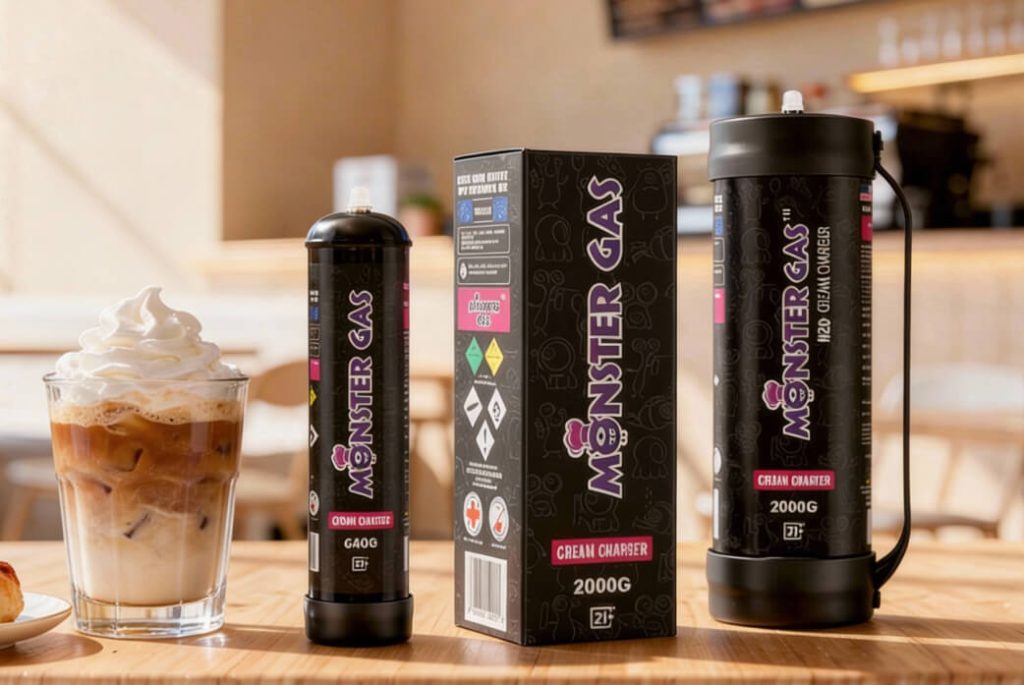
- UN2037 (Receptacles, small, containing gas) — this is the classification that usually applies to small charged cylinders like 8g cream chargers, since they fall under the “small gas cartridge” category rather than bulk compressed gas tanks.
Your supplier’s dangerous goods declaration should specify the correct UN number, packing group, and hazard class for the specific format you’re ordering (8g chargers vs. larger tanks). If a supplier can’t tell you which classification applies to your order, that’s a red flag — it usually means the shipment hasn’t been properly prepared for international transport, and that’s exactly the kind of gap that leads to it being held at a port or airport.
Air vs. Ocean vs. Ground: What Actually Works for Bulk Orders
Mode of transport is where most first-time importers get tripped up. Here’s the practical reality for each:
- Air freight: Heavily restricted. Compressed gas cylinders, including cream chargers, are prohibited or severely limited on passenger aircraft, and even dedicated air cargo carriers require special dangerous goods handling approval. For most wholesale volumes, air freight is either unavailable or prohibitively expensive once DG surcharges are added.
- Ocean freight: The standard method for large wholesale and container-volume orders. Slower (typically 3-6 weeks depending on origin and destination), but ocean carriers have established dangerous goods procedures for compressed gas, and per-unit shipping cost is dramatically lower than air.
- Ground freight: Used for regional distribution once product has cleared customs and entered the destination country/region — for example, moving product from a US port warehouse to distributors across multiple states, or from an EU import hub to retailers across the bloc.
The practical takeaway: if you’re ordering pallet or container quantities, plan around ocean freight timelines and build a 4-8 week buffer between order placement and inventory-in-hand, factoring in production, DG documentation, transit, and customs clearance.
Can You Fly With Cream Chargers?
This comes up constantly from buyers who want to hand-carry a sample order or bring inventory back from a trade show. The short answer: no, not in checked or carry-on luggage on passenger flights. Pressurized gas cartridges are on the prohibited items list for both checked and carry-on baggage under IATA dangerous goods regulations and TSA/aviation security rules in virtually every country. If you need product moved quickly for a small order, freight forwarders offering expedited ocean or specialized air cargo (with proper DG certification) are the only compliant option — not passenger luggage.
Importing Into the US and EU: Customs, Tariff Codes & Compliance
Once a shipment reaches the border, customs clearance depends on accurate classification and paperwork:
- HTS/HS Tariff Codes: Nitrous oxide and related cylinder products are classified under specific Harmonized System codes that determine duty rates. Get the correct HS code from your supplier or customs broker before the shipment ships, not after — misclassification is one of the most common causes of customs delays and penalty assessments.
- Agency oversight (US): Depending on end use and labeling, shipments can draw attention from CBP (Customs and Border Protection), DOT (for hazmat transport compliance), and in some cases FDA (given N2O’s use as a food-grade propellant under E942). Food-grade certification and correct labeling reduce friction with all three.
- EU import compliance: EU customs additionally expect CLP (Classification, Labelling and Packaging) compliant labeling and, depending on the member state, proof that the product meets food-grade or industrial-grade specifications as declared. Countries with tightened recreational-use restrictions (covered in our country-by-country N2O regulations guide) may apply additional import scrutiny even for legitimate food-grade wholesale shipments.
- Required documents: Commercial invoice, packing list, certificate of analysis (CoA), safety data sheet (SDS), dangerous goods declaration, and (for food-grade claims) documentation supporting E942 food additive compliance.
How to Avoid Delays: Documentation Checklist for Wholesale Buyers
Before your order ships, confirm your supplier can provide all of the following — missing even one of these is the single most common cause of customs holds we see wholesale buyers run into:
- Commercial invoice with accurate product description and HS/tariff code
- Packing list matching the physical shipment exactly (unit counts, carton counts, weights)
- Certificate of Analysis (CoA) confirming purity grade (99.5%+ or 99.7%+ food-grade N2O)
- Safety Data Sheet (SDS) in the destination country’s required language
- Dangerous Goods Declaration with correct UN number (1070 or 2037) and packing group
- Import license or registration, if required by the destination country
- Freight forwarder or customs broker briefed on hazmat classification before arrival
If you’re new to wholesale ordering, our guide to ordering wholesale cream chargers in the USA walks through the domestic side of this process in more detail.
Cost Factors: What Actually Drives Bulk Shipping Prices
Wholesale buyers are frequently surprised by shipping quotes until they understand what’s built into the number:
- Dangerous goods surcharges: Carriers charge a DG handling fee on top of standard freight rates — this alone can add 15-40% depending on mode and carrier.
- Packaging requirements: UN-certified packaging (rated for the specific hazard class) costs more than standard cartons and is non-negotiable for compliant shipping.
- Volume and container utilization: Ocean freight priced per container (FCL) is dramatically more cost-efficient per unit than less-than-container (LCL) shipments, which is why most serious wholesale buyers scale toward full-container orders as volume grows.
- Destination customs fees and duties: These vary by country and by correct/incorrect tariff classification — another reason accurate HS coding matters directly to your landed cost.
For a full breakdown of how order volume affects your per-unit cost, see our wholesale cream charger pricing comparison for 2026.
Choosing a Supplier With Reliable Logistics
The single biggest predictor of whether your shipment arrives on time isn’t the carrier — it’s whether your supplier has done this before, correctly, at scale. Before committing to a bulk international order, ask any prospective supplier:
- Can you provide a UN-compliant Dangerous Goods Declaration for this exact product and packaging format?
- What’s your typical customs clearance time to my country, and do you have a track record of on-time delivery there?
- Do you work with an established freight forwarder experienced in compressed gas shipments?
- Can you supply CoA and SDS documentation in advance of shipment, not just on request after a hold?
Our guide to choosing a wholesale cream charger supplier covers the full vetting checklist beyond logistics, including purity certification and pricing structure.
FAQ
Can nitrous oxide cream chargers be shipped internationally?
Yes, but only via compliant freight channels (primarily ocean, with ground distribution after customs clearance) using proper dangerous goods documentation. They cannot be shipped via passenger air travel or carried in luggage.
What UN number applies to cream chargers?
Most 8g cream chargers ship under UN2037 (small gas cartridges), while bulk compressed nitrous oxide tanks typically fall under UN1070. Your supplier’s shipping documentation should specify which applies to your order.
How long does international shipping take for a wholesale order?
Ocean freight typically takes 3-6 weeks transit time depending on origin and destination, plus customs clearance time. Most buyers should plan for a 4-8 week window from order to inventory-in-hand.
Do I need an import license to bring cream chargers into my country?
It depends on the destination country’s specific regulations for N2O and compressed gas products. Check our country-by-country regulations guide or consult a customs broker before placing a large order.
Why do customs holds happen with cream charger shipments?
The most common causes are missing or inconsistent dangerous goods documentation, incorrect tariff/HS code classification, and missing certificates of analysis or safety data sheets. Confirming all documentation before shipping is the best way to avoid this.
Ready to Import Wholesale Cream Chargers?
MonsterWhip ships certified 99.7% food-grade N2O (E942) cream chargers manufactured in Europe, with full documentation support (CoA, SDS, Dangerous Goods Declaration) for wholesale buyers across the US and Europe. Request a wholesale quote and our team will walk you through shipping timelines and documentation requirements for your country, or check our current wholesale pricing to plan your order volume.
Recent posts
- How to Spot Fake or Low-Quality Cream Chargers: A Wholesale Buyer’s Checklist
- 640g vs 2kg Cream Chargers: Which Size Is Right for You?
- Cream Chargers Chicago: Wholesale N2O for Restaurants, Bars & Catering
- Cream Chargers Miami: Wholesale N2O for Restaurants, Bars & Catering
- Cream Chargers Houston: Wholesale N2O for Restaurants, Bars & Catering