Share:

N2O Safety Certifications: CE, TUV & Food-Grade
Why Safety Certifications Matter When Buying Cream Chargers
Not all cream chargers are created equal. The N2O market includes products ranging from fully certified, food-grade cylinders to uncertified imports with questionable purity levels. For commercial buyers — restaurants, hotels, catering companies — understanding safety certifications is not just a regulatory requirement, it is essential for protecting your customers and your business.
MonsterWhip products carry CE marking, TÜV certification, and food-grade N2O purity ratings, ensuring they meet the highest European standards. Here is what each certification means and why it matters.
CE Marking: The European Compliance Baseline
The CE mark (Conformité Européenne) indicates that a product meets EU health, safety, and environmental protection standards. For pressurised gas cylinders like cream chargers, CE marking covers the pressure vessel itself — its design, materials, manufacturing process, and pressure testing.
A CE-marked cream charger has been independently verified to withstand its rated pressure with appropriate safety margins. This is critical because N2O cylinders operate at pressures of 40–50 bar. Cylinders without proper CE certification may have inconsistent wall thickness, poor welding, or inadequate pressure relief mechanisms.
TÜV Certification: Independent Third-Party Verification
TÜV (Technischer Überwachungsverein) is a German-based independent testing and certification body recognised globally for its rigorous standards. A TÜV-certified cream charger has undergone testing that goes beyond the minimum CE requirements, including burst pressure testing, material composition analysis, and manufacturing facility audits.
For wholesale buyers, TÜV certification provides an additional layer of confidence. It means the product has been examined by an independent third party with no commercial interest in the outcome — a level of scrutiny that self-declared CE marking alone does not guarantee.
Food-Grade N2O Purity: E942 Standard
The gas inside the cylinder matters just as much as the cylinder itself. Food-grade nitrous oxide is classified as food additive E942 under EU regulations. To qualify, the N2O must meet strict purity thresholds — typically 99.7% or higher — with defined maximum limits for moisture, carbon dioxide, carbon monoxide, and other impurities.
Industrial-grade N2O, by contrast, may contain higher levels of contaminants that are acceptable for industrial applications but not suitable for food contact. Using non-food-grade N2O in cream dispensers can affect the taste, texture, and safety of the final product.
All MonsterWhip cream chargers contain E942-certified food-grade N2O with purity levels exceeding 99.7%.
Cylinder Material and Construction Standards
Beyond the gas purity, the physical cylinder must meet specific material standards. High-quality cream chargers use seamless steel construction (typically EN 10120 or equivalent grade steel) that provides uniform wall thickness and predictable pressure behaviour. The valve mechanism should comply with relevant EN standards for gas cylinder valves.
Cheaper alternatives may use welded construction or lower-grade steel, which introduces potential weak points in the pressure envelope. For a commercial kitchen operating dispensers throughout service, this is a risk that responsible operators cannot afford to take.
What to Look for When Sourcing Wholesale Cream Chargers
When evaluating a cream charger supplier, ask for documentation on these key points:
- CE Declaration of Conformity — a signed document from the manufacturer confirming EU compliance
- TÜV or equivalent third-party test certificate — independent verification of safety standards
- E942 food-grade N2O certificate — laboratory analysis confirming gas purity
- Material traceability — steel grade and batch tracking for the cylinders
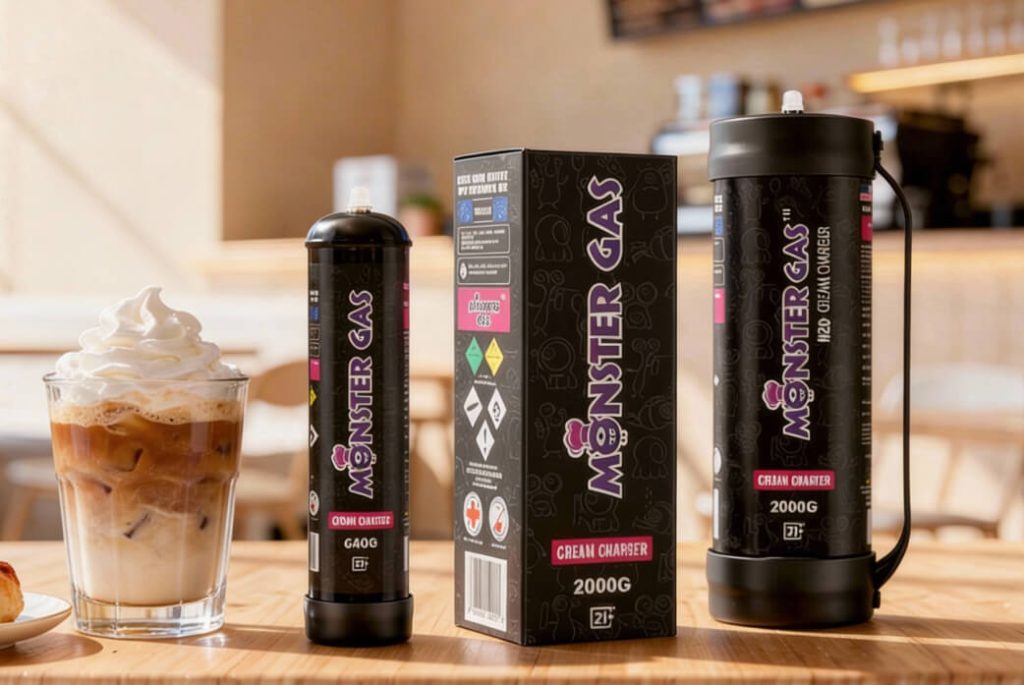
MonsterWhip provides full certification documentation for all products. Whether you are ordering 640g cylinders or 2KG tanks, every batch comes with the paperwork to satisfy health inspectors and internal compliance teams.
Have questions about our certifications? Contact the MonsterWhip team and we will provide the documentation you need.
Related Reading
For a broader overview of the regulatory landscape, read our guide on N2O cream charger regulations in Europe. Also see our advice on how to store and handle cream chargers safely.
Related MonsterWhip Resources
Wholesale Cream Chargers Europe · Wholesale USA · N2O Laws by Country · Cost Calculator · Compare Brands