Share:
How to Use a Whipped Cream Dispenser (Plus 7 Fixes for Common Problems)
A whipped cream dispenser turns plain cream into perfect, stable foam in seconds — but only if you use it correctly. If your cream comes out runny, watery, or the gas seems to do nothing, the problem is almost always a small technique error, not your equipment. This guide walks you through how to use a whipped cream dispenser step by step, then fixes the seven problems people run into most. Master this once and you will get café-quality results at home every time.
What you need before you start
You need three things: a whipping siphon (dispenser), a cream charger filled with food-grade N2O (E942), and cold heavy cream with at least 30% fat. Fat content matters enormously — anything below 30% will not hold air properly, no matter how good your technique. Have the cream chilled straight from the fridge; warm cream is the single most common reason whipped cream fails to set.
Step-by-step: using your dispenser
Step 1 — Pour the cream. Unscrew the head of the siphon and pour cold heavy cream into the canister. Do not exceed the maximum fill line. Overfilling leaves no room for the gas to work and is the top cause of runny results.
Step 2 — Add flavour (optional). For sweetened cream, add a little sugar, powdered sugar, or vanilla now. Powdered sugar dissolves best. Keep additions modest so they do not clog the nozzle.
Step 3 — Seal the head. Screw the head back on firmly and straight, so the seal sits flush. A crooked or loose head lets gas escape — if you hear hissing later, this is usually why.
Step 4 — Load the charger. Place an N2O cream charger into the charger holder, narrow end facing the siphon, and screw it onto the valve. You will hear the gas release into the canister with a short hiss. For a one-litre siphon you may need two chargers; a half-litre siphon needs one.
Step 5 — Shake. Remove the empty charger, then shake the siphon firmly four to six times, holding it upright. Shaking is what disperses the gas through the cream — skip it and the gas stays at the top and the cream stays liquid.
Step 6 — Dispense. Turn the siphon fully upside down, nozzle pointing down, and gently squeeze the lever. Perfect whipped cream should flow out thick and hold its shape. Always dispense head-down so the gas pushes the cream, not the other way around.
The 7 most common problems — and how to fix them
1. Cream comes out runny or liquid. Either the cream was too low in fat, too warm, or you did not shake enough. Use 30%+ cream straight from the fridge and shake a few more times. If it is still thin, add one more charger and shake again.
2. Nothing comes out at all. The cream may be too thick (over-shaken or very high fat) or the nozzle is blocked. Shake once more and try; if blocked, see problem 6.
3. The gas seems to do nothing. The head is not sealed properly, so the gas escaped instead of entering the cream. Release pressure, re-seat the head straight and tight, and charge again with a fresh cartridge.
4. Cream is over-whipped and grainy. You shook too much and started turning it to butter. Use fewer, gentler shakes next time — four to six is plenty.
5. Watery liquid sprays out first. The siphon was not held fully upside down, or the cream separated. Always invert completely before pressing the lever, and shake again if it has been sitting.
6. The nozzle is clogged. Sugar lumps or fruit pieces are blocking it. Remove the nozzle, rinse it under warm water, and only ever use dissolved or powdered sweeteners and strained purées.
7. Hissing or gas leaking from the head. The seal (gasket) is worn, dirty, or the head is loose. Clean the gasket, check it is not cracked, and tighten the head evenly. Replace the gasket if leaks persist.
Beyond whipped cream: what else your dispenser can do
Once you are comfortable, a whipping siphon is a serious creative tool. Use it for flavoured creams (coffee, matcha, salted caramel), light mousses, espuma foams for plating, infused cocktail toppings, and even savoury foams like parmesan or beetroot for fine-dining presentation. The same N2O charger that whips cream also aerates these mixtures — just strain anything with solids first so the nozzle stays clear.
Cleaning and storage
Clean your siphon after every use. Release all remaining pressure first by pressing the lever until no more gas or cream comes out — never unscrew the head while it is still pressurised. Then disassemble the head, nozzle, and gasket and wash them in warm soapy water. Store the parts dry and reassemble only when you next need it. Well-maintained gaskets are the secret to leak-free performance for years.
How many chargers do you need per siphon?
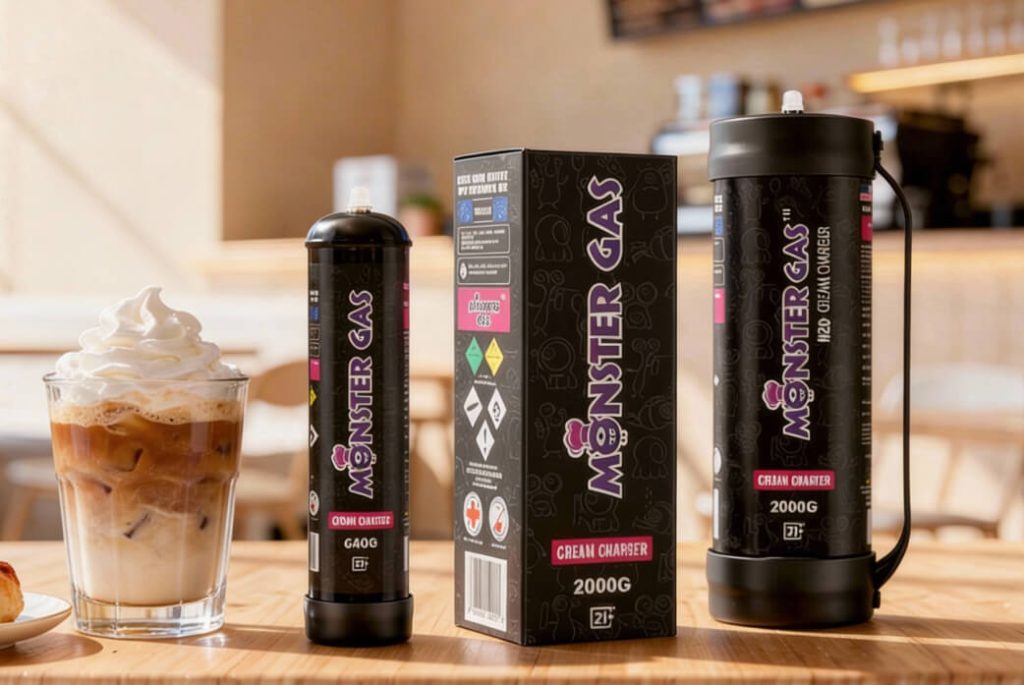
A common question is how many cartridges a single batch requires. As a rule, a half-litre siphon needs one 8g charger, and a one-litre siphon needs two. If the cream still comes out thin after shaking, adding one extra charger and shaking again almost always fixes it — within reason, since over-charging combined with over-shaking can push the cream toward butter. For high-volume kitchens, this constant reloading is exactly why many professionals switch to a larger N2O cylinder that re-pressurises the siphon from a single tank, saving both time and money during service.
Pro tips for café-quality results
A few small habits separate good whipped cream from great. Chill the siphon canister in the fridge for ten minutes before filling — a cold canister keeps the cream stable longer. Sweeten lightly; too much sugar weighs the foam down and clogs the nozzle. If you are making flavoured cream, strain any syrup or purée first so no solids reach the valve. And always dispense onto a cold plate or dessert; warm surfaces collapse the foam in seconds. Stored in the fridge, a charged siphon keeps cream ready to dispense for a day or two, which is a huge advantage during a busy service.
Frequently asked questions
Why is my whipped cream runny even after charging? The cream is likely under 30% fat, too warm, or under-shaken — use cold 30%+ cream and shake a few more times. Can I refrigerate the siphon with cream still inside? Yes, a charged siphon keeps in the fridge for one to two days; shake before each use. Is the gas safe for food? Yes, when it is E942 food-grade N2O — the only grade you should ever use in a kitchen. Can I use milk instead of cream? No, milk lacks the fat needed to hold foam; you need heavy cream with at least 30% fat.
Get the right chargers for flawless results
Great whipped cream starts with clean, high-purity gas. Every MonsterWhip cream charger is filled with 99.9% pure, E942 food-grade N2O — no metallic aftertaste, just stable, professional foam. Whether you need standard 8g capsules for home or larger cylinders for your café, order through the form on this page or message us on WhatsApp for fast EU delivery and bulk pricing.
Related guides & wholesale info
- Wholesale cream charger pricing for cafés, bars and restaurants.
- N2O regulations by country — stay compliant.
- Request a wholesale quote and get bulk rates.
Recent posts
- How to Spot Fake or Low-Quality Cream Chargers: A Wholesale Buyer’s Checklist
- 640g vs 2kg Cream Chargers: Which Size Is Right for You?
- Cream Chargers Chicago: Wholesale N2O for Restaurants, Bars & Catering
- Cream Chargers Miami: Wholesale N2O for Restaurants, Bars & Catering
- Cream Chargers Houston: Wholesale N2O for Restaurants, Bars & Catering