Share:
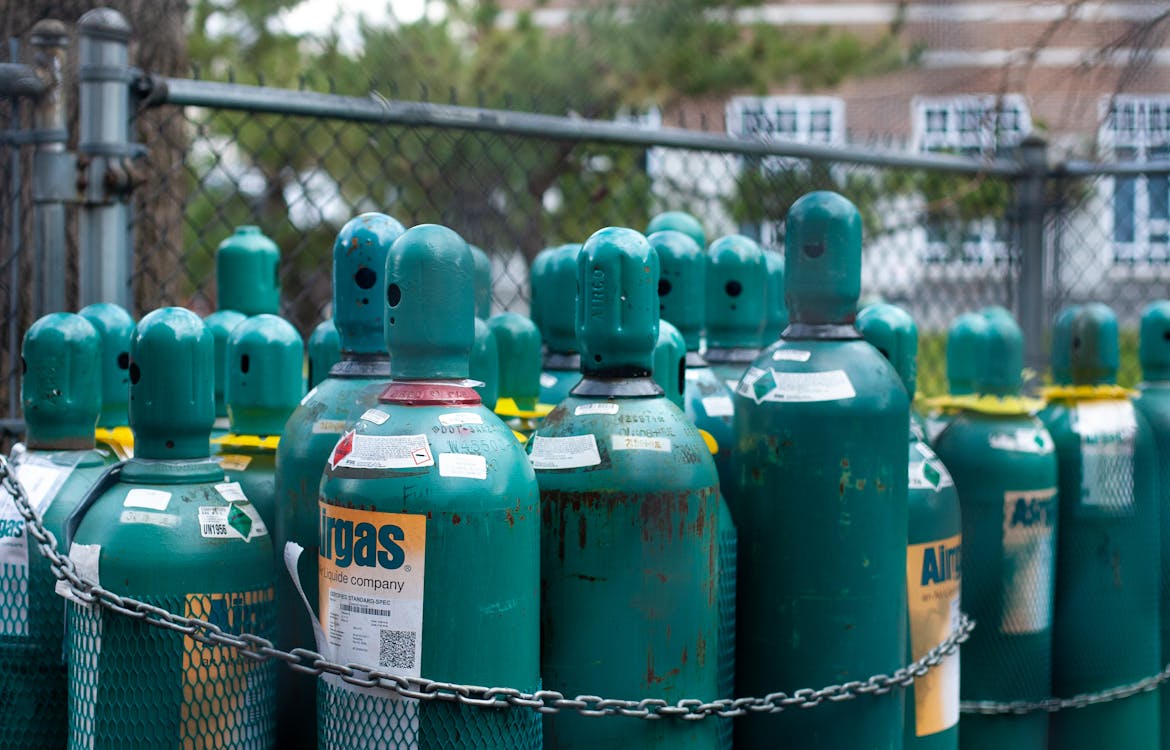
Cream Charger Sizes: 640g vs 2kg N2O Tanks
If you are buying cream chargers for a professional kitchen, understanding the difference between charger sizes is essential for choosing the right product and getting the best value from your wholesale budget. This guide breaks down the two most popular commercial cream charger formats — 640g and 2kg N2O tanks — and helps you decide which is right for your operation.
Understanding Cream Charger Sizes
Commercial cream chargers come in several sizes, but the two formats that dominate the wholesale market for professional kitchens are the 640g charger and the 2kg tank. Both contain food-grade nitrous oxide (N2O) used for dispensing whipped cream, foams, mousses, and other culinary applications, but they differ significantly in capacity, cost-efficiency, and best use cases.
The traditional 8g charger that most people associate with whipped cream dispensers is still widely available, but it is impractical for commercial kitchens that go through large volumes daily. A busy restaurant might use 50-100 of these small chargers per day, which is both expensive and generates excessive waste. The 640g and 2kg formats solve this problem by delivering the same food-grade N2O in a much more efficient package.
The 640g Cream Charger
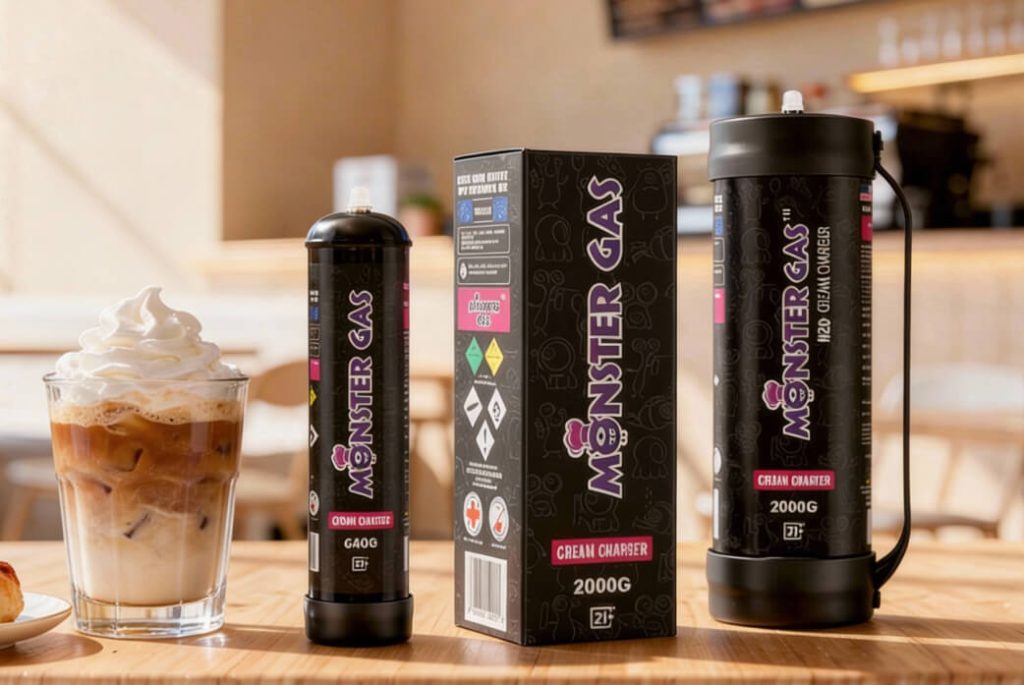
The 640g cream charger, such as the MonsterWhip 640g, is the mid-size option that has become the standard workhorse for many hospitality businesses. It contains approximately 80 times the N2O of a traditional 8g charger, making it dramatically more efficient for daily commercial use.
Best for: Individual restaurants, cafes, cocktail bars, small catering operations, mobile food service, and businesses that go through moderate volumes of whipped cream or foams daily.
Advantages: Compact enough for smaller kitchens, easy for staff to handle and change, lower upfront cost per unit, and ideal for businesses just starting to scale their cream charger usage. The 640g format also works with most standard cream dispensers used in professional kitchens.
Typical usage: A mid-volume cafe or restaurant might use 2-4 of these per week, while a busy cocktail bar could go through one per day during peak service.
The 2kg N2O Tank
The 2kg tank, such as the MonsterWhip 2kg, is the heavy-duty option designed for high-volume operations. With over three times the capacity of the 640g charger, it is the most cost-efficient option on a per-gram basis and the preferred choice for large-scale food service.
Best for: Hotel kitchens, restaurant chains, large catering companies, event venues, high-volume patisseries, and wholesale distributors who supply multiple end customers.
Advantages: Lowest cost per gram of N2O, fewer changeouts during service (critical during peak hours), less packaging waste, and ideal for operations that go through high volumes consistently. The 2kg format is also the preferred option for distributors, as it offers the best wholesale margins.
Typical usage: A busy hotel kitchen or restaurant chain location might use 1-2 tanks per week, while a large catering operation could go through several per event.
640g vs 2kg: Side-by-Side Comparison
Capacity: The 2kg tank holds approximately 3.1 times more N2O than the 640g charger. If you currently use three 640g chargers per week, switching to one 2kg tank delivers the same output with less hassle.
Cost per gram: The 2kg tank typically offers 15-25% lower cost per gram of N2O compared to the 640g charger when bought at wholesale pricing. Over a year of high-volume use, this adds up to significant savings.
Convenience: Fewer changeouts means less disruption during service. The 2kg tank lasts longer between replacements, which is particularly valuable during peak kitchen hours when staff time is at a premium.
Storage: The 2kg tank requires more storage space. If your kitchen has limited storage, the compact 640g charger may be more practical despite the slightly higher per-gram cost.
Waste reduction: Both formats produce dramatically less packaging waste than traditional 8g chargers. The 2kg tank is the most environmentally efficient option, as one tank replaces approximately 250 traditional chargers.
How Many Cream Chargers Does Your Business Need?
Estimating your monthly cream charger requirement depends on several factors: how many servings of whipped cream, foams, or other N2O-based preparations your kitchen produces daily, the size of each serving, and how many days per week you operate.
As a rough guide: a single 640g charger produces approximately 15-20 litres of whipped cream. A 2kg tank produces approximately 45-60 litres. If your kitchen produces 10 litres of whipped cream per day across all dishes, you would need approximately 3-4 of the 640g chargers per week, or roughly 1 of the 2kg tanks per week.
For a more precise estimate based on your specific menu and volume, contact our wholesale team at WhatsApp +352 691 182 278 — we help hundreds of businesses right-size their N2O orders every month.
Which Size Should You Choose?
For most businesses ordering wholesale, the decision comes down to volume and storage. If you go through more than 2-3 units of the 640g per week, the 2kg tank will save you money and reduce kitchen disruptions. If you are a smaller operation or have limited storage, the 640g charger offers a great balance of efficiency and practicality.
Many of our wholesale customers order a mix of both sizes — 2kg tanks for their main kitchen production and 640g chargers for satellite stations, bars, or mobile catering setups. MonsterWhip offers both formats in bulk packs at wholesale pricing, so you can optimise your order for your exact operational needs.
Browse our wholesale cream charger range or contact our team for a tailored recommendation.
Related Resources
- Best Wholesale Cream Chargers 2026
- How to Choose a Wholesale Supplier
- Wholesale Cream Chargers USA
- Wholesale Cream Chargers Europe
Related Reading
For a detailed cost analysis, see our ROI breakdown for 2KG cream chargers in commercial kitchens. Hotels and resorts can find specific insights in our guide on why hospitality is switching to large-format N2O.
Related MonsterWhip Resources
Wholesale Europe · Wholesale USA · N2O Laws by Country · Cost Calculator · Compare Brands