Share:
How to Spot Fake or Low-Quality Cream Chargers: A Wholesale Buyer’s Checklist
Every wholesale buyer eventually gets the offer that looks too good: the same cylinder size as everyone else, thirty per cent cheaper, shipping next week. Sometimes it is a genuine volume deal. More often, something has been taken out — gas, steel, purity, or paperwork — and you only find out once it is in your kitchen.
This is the checklist we use ourselves when we qualify a filling plant, written out so you can run it on any supplier, including us. None of it requires a laboratory. Most of it is a set of scales and a few direct questions.
Why underfilled and off-spec gas is a business problem, not just a quality one
Three things go wrong, in rising order of cost.
You pay for gas you never receive. A cylinder sold as 2kg that actually holds 1.7kg is a 15% price increase disguised as a discount. Nobody notices, because almost nobody weighs incoming stock.
Impure gas damages equipment and product. Nitrous oxide that has not been properly dried or scrubbed carries moisture and oil residues. Moisture corrodes dispenser valves from the inside. Oil carry-over taints cream and leaves a flat, slightly metallic finish that your chefs will blame on the dairy.
Undocumented gas is a liability you cannot discharge. If an environmental health officer asks what you are putting in food and the honest answer is “a pallet from a trader who will not name the filling plant”, the paperwork problem is yours, not your supplier’s. Food-grade nitrous oxide is E942, a regulated food additive. It is expected to come with traceable documentation.
The seven checks
1. Weigh a cylinder before you accept the pallet
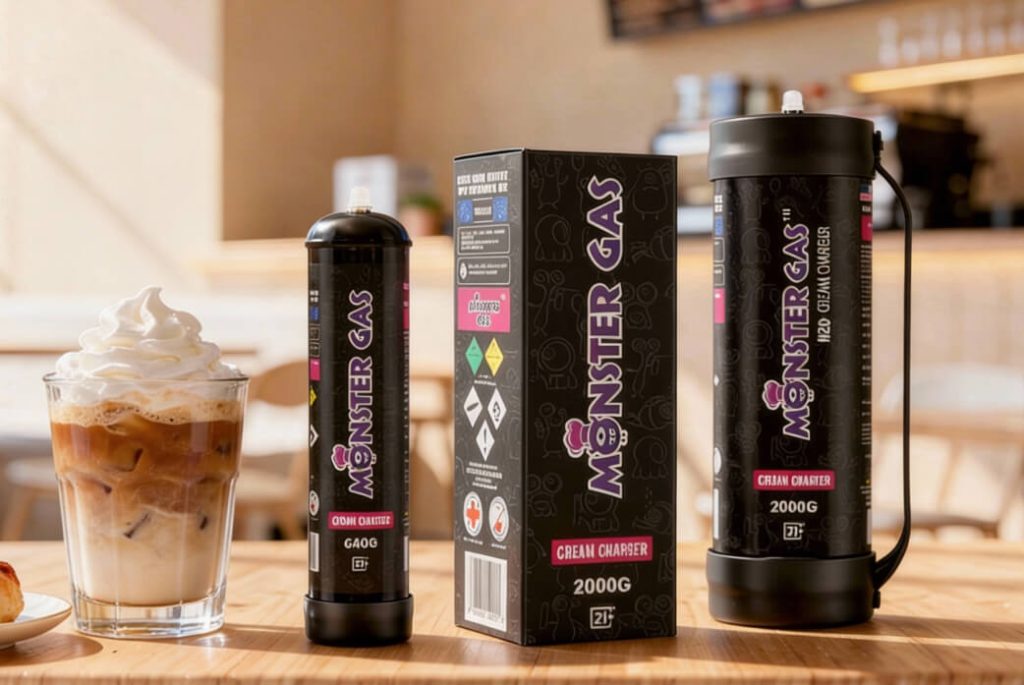
This is the single highest-value check and it takes a minute. Refillable cylinders carry a stamped tare weight — the empty weight of the steel. Put a full cylinder on a scale, subtract the tare, and you have the actual gas content.
Compare it with what you were sold. A small variance is normal; filling is not surgical. A consistent shortfall across several cylinders from the same batch is not a variance, it is a business model. Check three or four from different positions on the pallet, not just the one on top.
2. Ask for a batch-specific Certificate of Analysis
Any serious filler can produce a Certificate of Analysis showing purity and the moisture and impurity limits for the gas you are actually buying. The test is not whether they have one — it is whether the one they send you carries your batch number.
A generic, undated PDF that gets emailed to every customer tells you nothing about the pallet in your warehouse. If a supplier cannot connect a certificate to a batch code on the cylinder, they have no traceability, which usually means they are reselling gas they did not fill and cannot vouch for.
For food use you are looking for food-grade nitrous oxide at 99.7% purity or better. Industrial-grade N₂O is a different product with different handling and is not intended to go anywhere near food.
3. Read the markings stamped on the cylinder shoulder
Pressure vessels are marked at manufacture, and the markings are hard to fake convincingly because they are stamped into steel rather than printed on a label. Look for the manufacturer’s identification, the working pressure, the cylinder’s own serial number, and the test date.
In the EU, transportable pressure equipment carries the π (pi) mark under TPED. In the US, look for DOT markings. A cylinder with a glossy printed wrap and no stamped markings underneath it should stop the delivery.
Refillable cylinders also have periodic inspection dates. A cylinder long past its test date is not something you want in a commercial kitchen regardless of what is inside it.
4. Test the valve before you commit to volume
Valve quality is where cheap suppliers save money, because the customer does not see it until the gas is already paid for. Connect one cylinder and look for three things: a clean thread that engages without force, a seal that holds without hissing, and a consistent flow rather than a stuttering one.
Cross-threading and slow leaks are the common failures. A cylinder that leaks slowly in storage will be noticeably light weeks later, and you will have paid full price for the gas that drifted into your stockroom.
5. Check packaging for batch traceability
Outer cartons should carry a batch or lot code that matches the cylinders inside and matches the certificate. Blank cartons, mismatched codes, or labels applied over other labels all point to repackaged stock of unknown origin.
Relabelling is not automatically sinister — distributors brand goods legitimately all the time. The question is whether the chain back to the filling plant is still readable. If it has been deliberately obscured, assume there is a reason.
6. Ask for the safety and compliance paperwork in writing
A legitimate supplier will send, without hesitation: a Safety Data Sheet, a food-grade declaration, and the correct dangerous-goods documentation for transport. Nitrous oxide ships as UN 1070, Class 2.2. If a supplier is vague about shipping classification, they are either not shipping it properly or not shipping it themselves.
Ask who the filling plant is and where it is. You will not always get a full answer for commercial reasons, but you should get a country and a straight response rather than deflection.
7. Apply the price sanity test
Gas, steel, testing, and freight have floors. When an offer sits well under the market across the board, the saving is coming from somewhere specific: less gas in the cylinder, thinner steel, skipped testing, lower purity, or no compliance paperwork.
Ask which one it is. The answer, or the absence of one, is usually the whole story. Genuine volume discounts have a visible logic — bigger order, fewer deliveries, better freight rates — and a supplier offering one will happily explain the arithmetic.
Red flags in order of seriousness
Walk away from: no stamped cylinder markings; refusal to supply a Safety Data Sheet; no batch code anywhere on the product; a purity claim with no certificate behind it.
Investigate before ordering again: a certificate that does not match your batch; consistent underweight cylinders; valves that leak or cross-thread; relabelled cartons with no readable origin; a price that nobody will explain.
Usually fine: small weight variance between cylinders; a distributor’s own branding; a filling plant they will name but not let you visit.
If you have already taken delivery of a bad batch
Stop using it, photograph the markings and labels, weigh several cylinders and write the numbers down, and put the complaint in writing with the batch code. Quarantine the stock rather than returning it immediately — physical evidence is what settles the argument.
A supplier who replaces the batch and explains what happened is worth keeping. A supplier who disputes your scales is telling you how the next order will go.
Frequently asked questions
Can I tell bad gas by smell or taste?
Not reliably, and tasting suspect product to test it is the wrong approach. Contamination that affects food quality can sit well below what anyone detects directly. Use the weight check and the certificate — they are objective and they happen before the gas reaches food.
Is a higher purity number always better?
Up to a point. For culinary use, food-grade at 99.7% or better is the standard. Claims of exotic purity levels well beyond that are usually marketing, and a specific number with no certificate behind it means less than a modest number that is properly documented.
Do disposable chargers need the same checks?
The principles carry over, but the method changes. Small disposable chargers cannot be weighed against a stamped tare, so you rely more on batch codes, the certificate, and consistency between boxes. Our guide to 640g vs 2kg cylinders covers how the formats differ for larger volumes.
What should I actually ask a new supplier first?
Three questions, in this order: what is the purity and can you send the certificate for the batch you will ship me; what is the stated fill weight and the tare weight; and who filled it. Suppliers who answer all three quickly tend to be fine. Suppliers who answer none of them have told you what you needed to know.
How often should I re-check an established supplier?
Spot-weigh one cylinder per delivery and keep the numbers in a simple log. It costs nothing and it catches slow drift, which is the realistic failure mode with a supplier who was fine at first.
Run the checklist on us
We would rather be audited than take an order on trust. Ask us for the Certificate of Analysis, the Safety Data Sheet, the tare and fill weights, or the batch code on any pallet we quote, and you will get them without a negotiation.
Message us on WhatsApp and we will send the documentation for your volume the same day, or request a wholesale quote through the form. If you are comparing us against another offer, send us their spec sheet — we will tell you honestly whether the price difference is real or whether something has been left out.
Recent posts
- How to Spot Fake or Low-Quality Cream Chargers: A Wholesale Buyer’s Checklist
- 640g vs 2kg Cream Chargers: Which Size Is Right for You?
- Cream Chargers Chicago: Wholesale N2O for Restaurants, Bars & Catering
- Cream Chargers Miami: Wholesale N2O for Restaurants, Bars & Catering
- Cream Chargers Houston: Wholesale N2O for Restaurants, Bars & Catering