Share:
640g vs 2kg Cream Chargers: Which Size Is Right for You?
640g or 2kg? The short answer
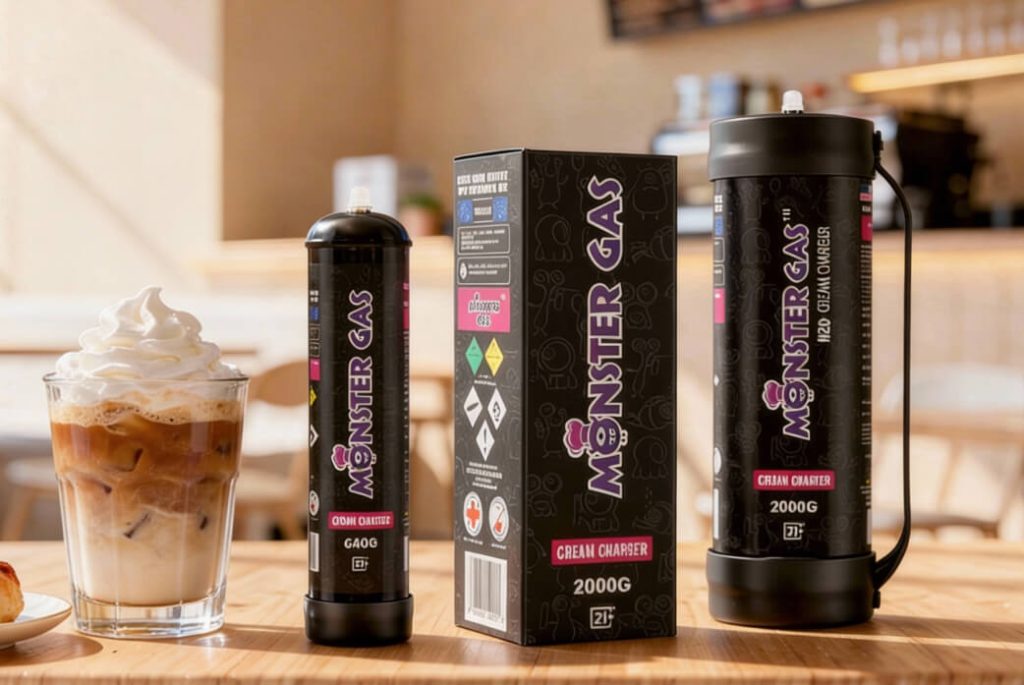
If your kitchen goes through fewer than about ten cylinders a week, the 640g format is the right call: it is lighter to handle, easier to store, and you are not tying up cash in stock that sits for months. If you are running high volume — a busy dessert section, a cocktail bar, a coffee chain, or you are reselling — the 2kg cylinder wins on cost per gram and on how often someone has to stop and swap a bottle.
Both contain the same product: 99.7% pure food-grade nitrous oxide (E942). The difference is packaging, handling and economics, not quality. Below is the detail behind that answer.
Side-by-side comparison
| 640g cylinder | 2kg cylinder | |
|---|---|---|
| N₂O per cylinder | 640 grams | 2,000 grams |
| Equivalent 8g chargers | ~80 | ~250 |
| Weight when full | Light — one-handed | Heavy — two hands, stable base needed |
| Retail pack | 6-pack carton | Single or 2-pack |
| Full pallet | 432 bottles (72 six-packs), 276.48 kg N₂O | 168 cylinders |
| Best for | Cafés, small kitchens, catering, trial orders | High-volume kitchens, bars, resellers |
| Cost per gram | Higher | Lower — the main reason to size up |
| Changeovers | More frequent | Roughly 3× fewer |
Why cost per gram is the number that matters
Comparing sticker prices between the two sizes is misleading, because you are buying different quantities of gas. The only fair comparison is cost per gram of N₂O.
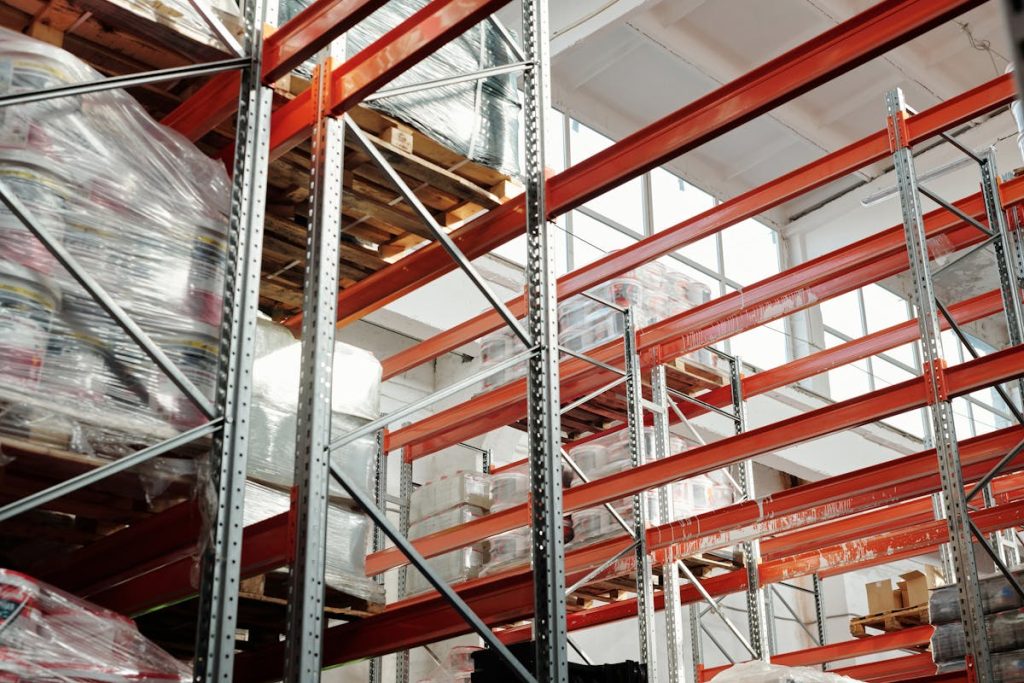
Take our own wholesale pallets as a worked example. A 640g pallet carries 432 bottles — that is 276.48 kg of nitrous oxide. A 2kg pallet carries 168 cylinders, which is 336 kg. The 2kg pallet delivers roughly 21% more gas for less money. On a per-gram basis the 2kg format is the clear winner, and that gap compounds every single week you operate.
The reason is simple: a large share of what you pay for any cylinder is the steel, the valve, the filling and the freight. Spreading those fixed costs over 2,000 grams instead of 640 grams is where the saving comes from.
So why would anyone buy 640g?
Because cost per gram is not the only cost. Four situations where 640g is genuinely the better business decision:
- Low or uneven volume. Nitrous oxide does not spoil, but cash tied up in stock is cash you cannot spend elsewhere. If a 2kg cylinder takes you two months to finish, you have bought working capital problems to save a few cents per gram.
- Handling and staff safety. A full 2kg cylinder is heavy and needs a stable surface. In a cramped kitchen with a young or high-turnover team, a lighter bottle that anyone can manage one-handed is a sensible trade.
- Storage limits. Six-pack cartons stack neatly on a standard shelf. 2kg cylinders need floor space and somewhere they will not be knocked over.
- Testing a supplier. A 6-pack is a low-risk way to check quality, purity and delivery before committing to a pallet.
Volume guide: which size for your business
Under 10 cylinders a week — go 640g
Cafés, small restaurants, catering businesses and dessert counters. Start with a 640g 6-pack. Easy to store, easy to handle, and the per-gram premium is small in absolute terms at this volume.
10 to 40 cylinders a week — go 2kg
Busy restaurants, cocktail bars and hotel kitchens. At this volume the per-gram saving is real money, and cutting changeovers by roughly two-thirds is a meaningful time saving for your team. The 2kg 2-pack is the usual starting point, with the single 2kg cylinder for topping up.
Pallet volume — go 2kg, and talk to us
Resellers, distributors and multi-site groups. At pallet level the per-gram difference becomes the single biggest line in your cost base. See our wholesale page for pallet and container pricing, or message us directly for a quote on your volume.
Can you mix both sizes?
Yes, and plenty of our customers do. A common setup is 2kg cylinders as the workhorse for daily service, with a few 640g bottles kept for outside catering, pop-ups and events where someone has to carry the kit. You get the per-gram economics where volume is predictable, and portability where it is not.
What does not change between the sizes
Purity is identical: 99.7% food-grade N₂O (E942) in both formats. Both are filled to the same standard, both carry the same hazard labelling, and both are subject to the same storage rules — keep them below 50°C, upright, away from direct heat, and secured so they cannot fall. Shelf life is not the deciding factor either; stored correctly, neither format is going to degrade before you use it. For the full detail see our shelf life and storage guide.
If you are new to the larger format, our guide to using a 2kg N₂O bottle covers regulator fitting, safe handling and getting a clean dispense.
Frequently asked questions
How many 8g chargers does a 2kg cylinder replace?
About 250. A 640g cylinder replaces about 80. Those figures are the reason most kitchens that move past occasional use stop buying small disposable chargers altogether — the waste and the handling time add up faster than the gas cost.
Is the gas in a 640g bottle different from a 2kg bottle?
No. Same 99.7% pure food-grade nitrous oxide, same filling standard. Only the cylinder size differs.
Do I need a different regulator for each size?
Check the valve thread on the cylinder you are buying and match your regulator to it. If you are switching size for the first time, message us with your current setup before you order and we will confirm what you need. It is a thirty-second conversation that avoids an expensive mistake.
Which size ships better internationally?
Both ship on standard EPAL pallets. The 2kg format gives you more gas per pallet — 336 kg against 276.48 kg — so your freight cost per gram is lower too. For container volumes, that difference is substantial.
What if I guess wrong?
Start small. Order a 6-pack or a 2-pack, run it through a normal week, and count the changeovers. Real usage data beats any estimate, including ours. Then scale into pallet volume once you know your actual weekly burn.
Before you order from anyone
Size is only half the decision; the other half is whether the cylinder actually contains what the label says. Our checklist for spotting fake or low-quality cream chargers walks through the seven checks worth running on any supplier before you accept a pallet.
Still not sure? Ask us
Tell us roughly how many litres of cream you whip in a week, or how many covers you do, and we will tell you which format fits — including when the honest answer is the cheaper one. We would rather size you correctly once than sell you a pallet you cannot store.
Message us on WhatsApp for a same-day answer and a quote on your volume, or request a wholesale quote through the form. Pallet and container pricing is available on request for both formats.
Recent posts
- How to Spot Fake or Low-Quality Cream Chargers: A Wholesale Buyer’s Checklist
- 640g vs 2kg Cream Chargers: Which Size Is Right for You?
- Cream Chargers Chicago: Wholesale N2O for Restaurants, Bars & Catering
- Cream Chargers Miami: Wholesale N2O for Restaurants, Bars & Catering
- Cream Chargers Houston: Wholesale N2O for Restaurants, Bars & Catering